Tag: art
-
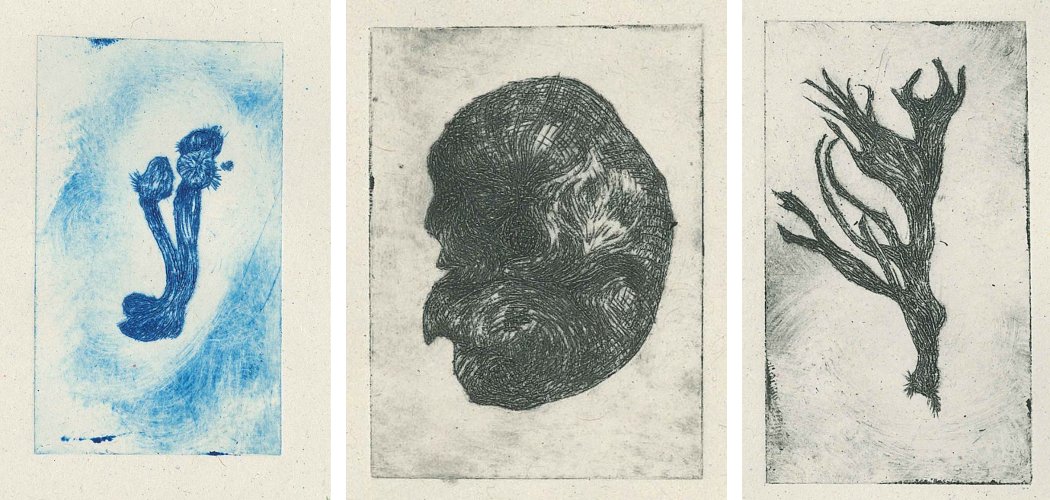
Fruiting Bodies in the Forest School
Fungi are unusual. They are easier to define through a process of elimination, by identifying what they are not. They are not animal, mineral or vegetable, but ‘fruiting bodies’, strange forms of life growing out of decay, with their own fecund vocabulary: hymenium, volva, universal veil, inner veil, sporangium, spore, apocethium. Since beginning my artist…
-
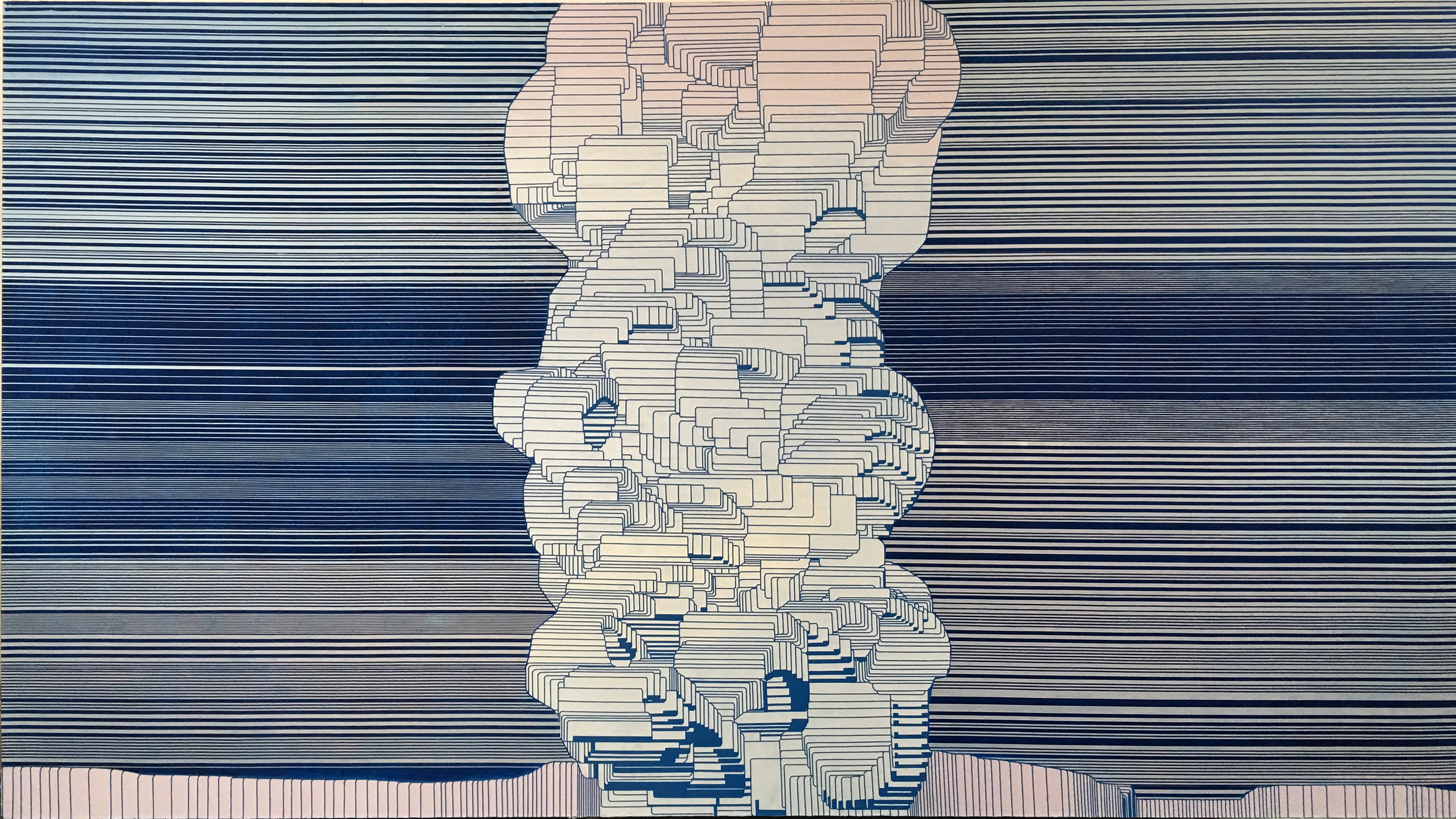
Duelling Hagiographies: Mao and Modernism
The world is yours as well as ours: a statement in which ancestry maintains a dialectic with reconstruction; engineered to mobilise disjunctions with the past over a period spanning sixty years. An exploration of abstraction within contemporary Chinese painting, the exhibition shares its title with a work by Jiang Zhi, one of nine artists commanding…
-

Dead Space and Ruins
Few things capture the present like the ruins of the past. After the lofty projects of the twentieth century have crumbled or collapsed, we are left today with certain reminders: literature, memories, a socio-political legacy, and – more photogenically – the rotting ruins of sundry grand architectural schemes. The connection between architecture and utopianism has…
-

Workers Hammer
The following is an edited extract from the conversation between artist John Stark and anthropologist David Graeber, author of Debt, the first 5000 years and The Utopia of Rules. The conversation was originally published in the catalogue that accompanies DoL Po, Stark’s solo show at Charlie Smith London, 20th May – 26th June 2016. …
-

The Chernobyl Herbarium
Chernobyl and Plant Life: Silent Witnessing It is incredibly difficult to talk and write about Chernobyl. No serious book on the subject has been able to dodge the task of thinking about the conditions of possibility for thinking in proximity to this theme or this scene. Still before commencing, a work on Chernobyl must first…
-

Isomorphology
For interdisciplinary artist Gemma Anderson, drawing is a mode of knowing and seeing. While drawing is often understood in terms of isolated observation, by sharing the process with a community, for Anderson, it becomes a type of agency for collective knowledge and critical vision. Drawing therefore functions as a bridge between public and private, between…
-
Kaiku
Kaiku peeked through the kitchen window. The scene was empty – the Shaman was out. Kaiku went to the kitchen cupboard. Behind the pots and pans her fingers found a key. With great care she opened the door. The action made her shiver with excitement. The heavy door opened slowly. The room bathed in sunlight.…
-

Revisiting Unknown Places
The art of Maria Pääkkönen concerns itself with a reciprocal relationship between drawing and place. On the one hand is the drawing of the place – that which is observed, recorded, remembered, evoked. On the other is the place of the drawing – its physical presence within the confines of the gallery. Somewhere in between…
-

HOUSEWORK
In November 2015, eleven artists took on a Victorian ruin. I was one of them. The resulting exhibition, HOUSEWORK, set out to re-inhabit the stripped-out terrace. In it, paintbrushes and brooms became interchangeable as artworks spilled out into architecture or architecture seeped into art. Words were regarded and discarded; sound waves scribbled in haste; phrases…
-
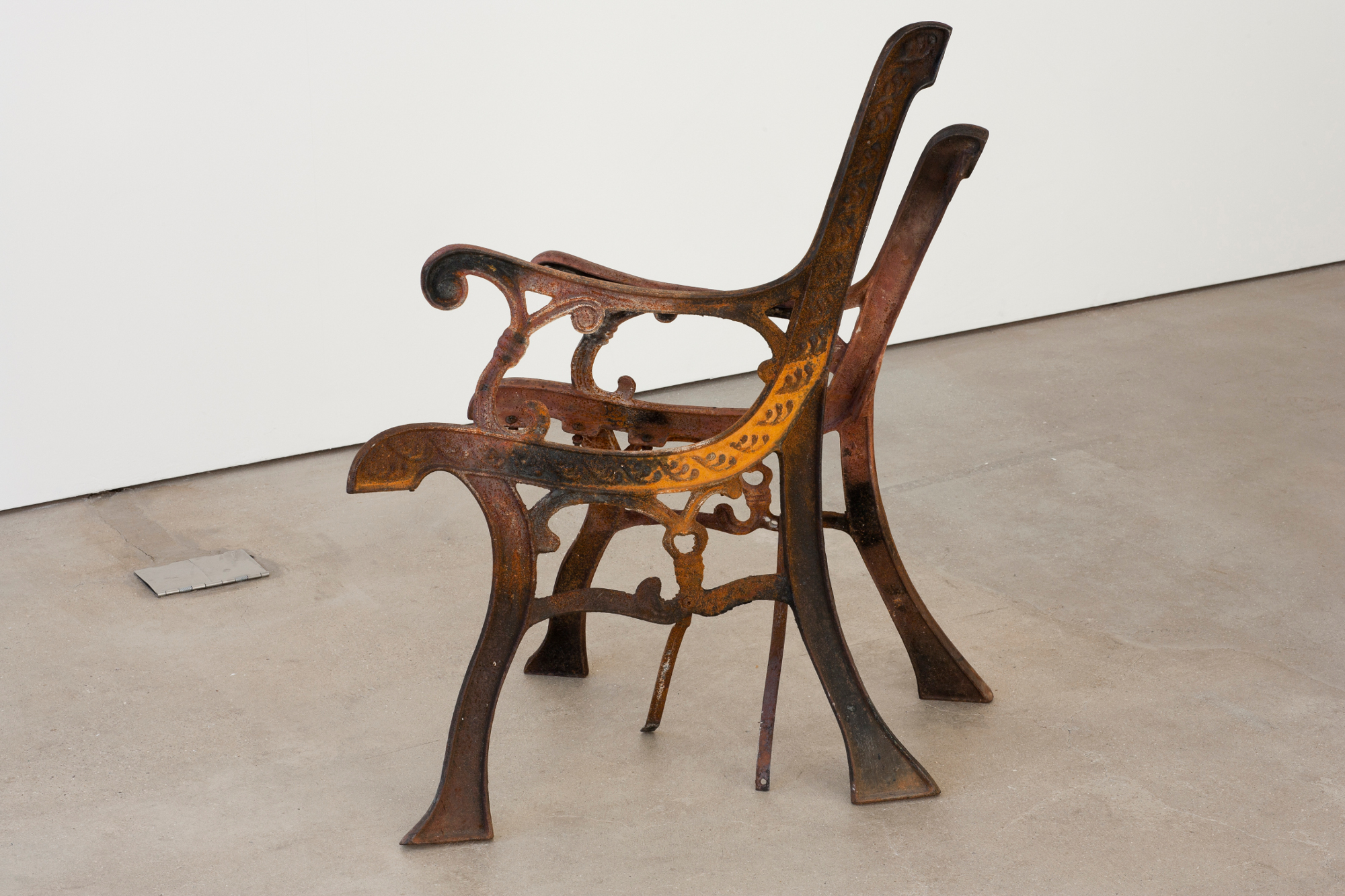
Bench
A little over eight years ago Jeppe Hein, the Danish installation artist, gave a presentation at the Barbican at which he talked about his Modified Social Bench series. His installation of outdoor benches, each of which was playfully altered to impair its functionality (one with exaggeratedly short or long legs, one apparently broken in two,…
-
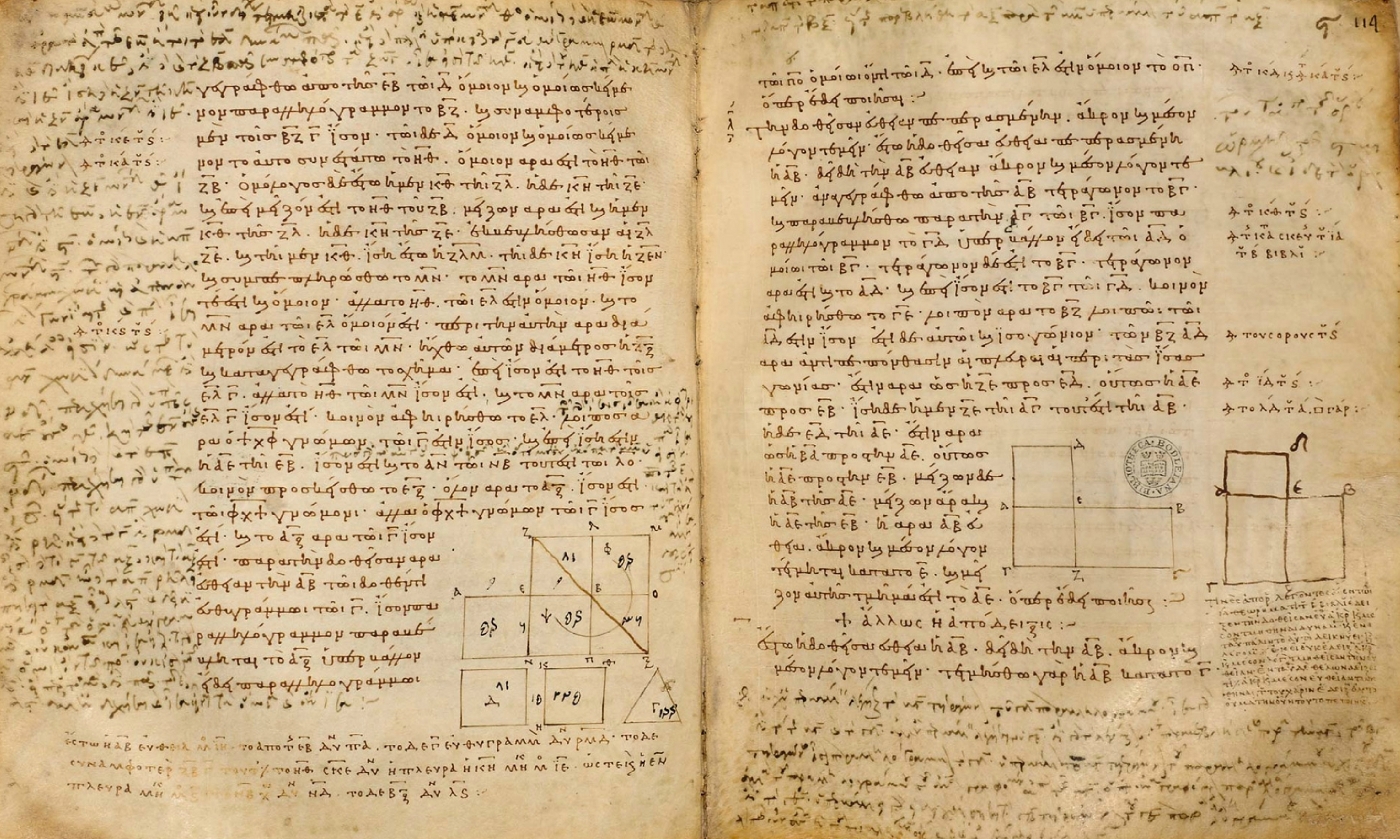
Euclid’s First Definition
Cover image: Euclid, Stoicheia (Elements). Manuscript, Constantinople, September 888. MS. D’Orville 301, fols. 113v-114r © Bodleian Libraries, University of Oxford (via Alain R. Truong)